







How to Issue an Invoice in KSeF for a Foreign Contractor (USA, EU, Ukraine): Specifics of International Deals
13.07.2026
Cash-Based PIT in Poland: How to Pay Tax Only After Receiving Payment
22.07.2026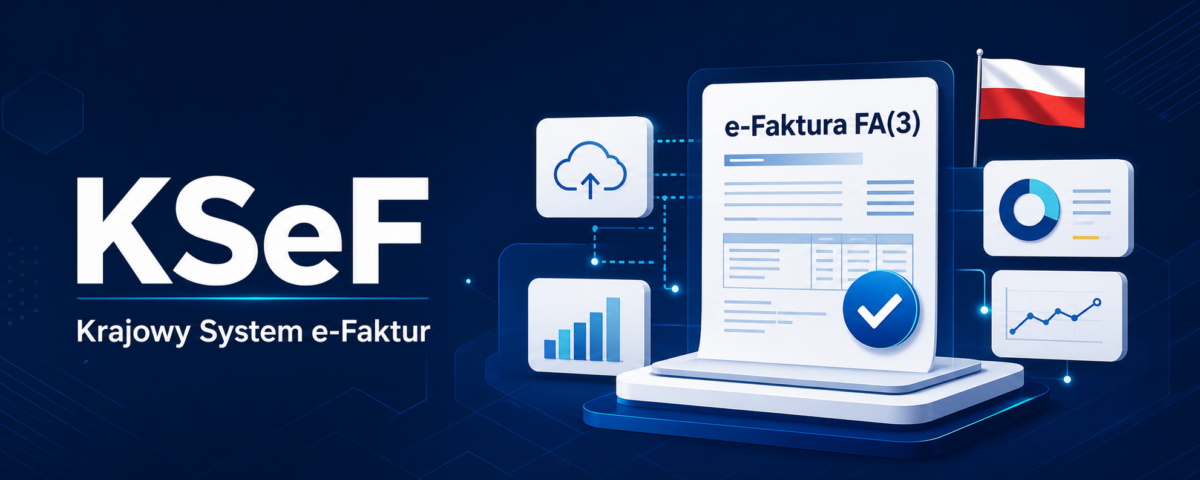
KSeF для малого бизнеса в Польше: пошаговое руководство - Финодитакс
The introduction of the National e-Invoicing System (Krajowy System e-Faktur, KSeF) is fundamentally transforming how businesses in Poland document commercial transactions. Sending PDF invoices via email or handing paper copies to clients is becoming obsolete. Under KSeF, every B2B invoice must be a structured XML document validated in real time by state tax servers. In this comprehensive guide, Finoditax experts explain how to prepare your business for KSeF, establish error-free invoicing workflows, and protect your company from severe financial penalties.
What is KSeF and Why PDF Invoices Are Becoming Obsolete
KSeF (Krajowy System e-Faktur) is the centralized digital platform operated by the Polish Ministry of Finance for issuing, receiving, and archiving structured electronic invoices. Unlike traditional PDF files sent over email, a KSeF invoice is a strictly formatted XML file adhering to an official logical structure (FA). An invoice is legally considered issued and served only once it has been transmitted to KSeF and assigned a unique KSeF identification number with an official timestamp. This eliminates backdated invoicing and unrecorded manual alterations.
- Real-time tax oversight — Tax authorities receive transaction data instantaneously upon invoice registration in KSeF.
- Standardized XML schema — All businesses use the exact same XML format, eliminating errors in party details and line items.
- Guaranteed delivery — Once processed by KSeF, the document is immediately available to the buyer, removing claims of undelivered emails.
- Centralized 10-year archive — Invoices are stored securely on Ministry of Finance servers for 10 years free of charge.
Readiness Checklist: What to Prepare Before KSeF Mandatory Launch
Preparing for KSeF requires operational adjustments. Small business owners should complete several critical administrative steps to ensure smooth daily invoicing.
- Verify authentication credentials — Ensure company representatives hold an active Trusted Profile (Profil Zaufany) or Qualified Electronic Signature.
- Submit ZAW-FA form (if required) — LLCs (Sp. z o.o.) without a qualified electronic seal containing NIP must register their primary authorized person via the ZAW-FA form at the local tax office.
- Select accounting and invoicing software — Decide whether to use the free Ministry tool (Aplikacja Podatnika KSeF) or commercial software with API integration.
- Generate authorization tokens — Create API tokens with appropriate permission levels in the KSeF user portal to connect your billing software.
- Delegate permissions to accountant — Formally grant invoicing permissions to your external bookkeeping provider within the KSeF system.
Step-by-Step Guide: How to Issue an Invoice via KSeF
Issuing a structured invoice in KSeF follows a strict digital sequence. Every file is automatically validated against syntax and formatting rules upon upload.
- Step 1: System authentication — Log into the KSeF Taxpayer Application or launch your integrated billing software using a generated API token.
- Step 2: Enter invoice details — Input buyer NIP, item descriptions, net amounts, VAT rates, and gross totals. The software formats these into the official XML schema.
- Step 3: Transmit XML to KSeF — Send the document to the Ministry of Finance gateway for automated validation.
- Step 4: Receive KSeF number and UPO — Upon successful validation, KSeF assigns a unique invoice ID and generates an Official Confirmation of Receipt (UPO). The date of transmission is legally considered the date of issue.
- Step 5: Provide visual copy (when applicable) — Polish B2B buyers access invoices directly in KSeF. For foreign or B2C clients, provide a PDF visualization containing the official KSeF QR code.
Pitfalls and Common Errors: How to Avoid Severe Penalties
Ignoring KSeF compliance carries significant financial exposure. Polish tax regulations establish strict administrative fines for issuing invoices outside the system or failing to meet offline submission deadlines.
- Bypassing KSeF for B2B transactions — Issuing a standard PDF invoice outside KSeF when required can incur fines of up to 100% of the VAT amount stated on that invoice.
- Missing offline emergency deadlines — During taxpayer system outages, invoices must be issued in offline mode and transmitted to KSeF within strict statutory timeframes once connectivity is restored.
- Misunderstanding issue date rules — The legal date of issue is the date KSeF accepts the XML file, not when the draft was saved locally, affecting tax reporting periods.
- Omitting QR codes on printed visualizations — Any human-readable PDF or printed invoice delivered outside KSeF must feature a QR code verifying its authenticity in the state database.
KSeF vs. Traditional Invoicing: Key Differences Comparison
Comparing conventional invoicing methods with KSeF highlights the structural shifts necessary for your sales and accounting workflows.
File format
Traditional: Unstructured PDF, Word, or paper. / KSeF: Structured XML conforming to the official FA schema.
Transmission channel
Traditional: Email, post, or manual handoff. / KSeF: Encrypted direct API transmission to tax authority servers.
Legal timestamp
Traditional: Date indicated on document text. / KSeF: Moment the KSeF server validates the file and generates UPO.
Error correction
Traditional: Corrective notes or replacement files. / KSeF: Strictly via formal Corrective Invoices (Faktura korygująca) submitted through KSeF. Buyer corrective notes are abolished.
Frequently Asked Questions About KSeF for Business Owners
Practical answers to common entrepreneur queries regarding daily operations in the KSeF environment.
Are B2C invoices required to go through KSeF?
Invoices issued to final consumers (B2C) are generally exempt from mandatory KSeF processing and can follow standard rules.
How do I invoice foreign clients in the EU or non-EU countries?
Invoices for foreign entities must be processed in KSeF, but you deliver a PDF visualization containing a valid QR code directly to the customer.
What happens during internet or system outages?
You operate in offline emergency mode, issue structured files locally, provide them to buyers, and transmit them to KSeF within the legally prescribed window after service restoration.
Can an invoice issued in KSeF be deleted or withdrawn?
No. Once accepted by KSeF, an invoice cannot be deleted or canceled. Adjustments must be made exclusively via a KSeF corrective invoice.
Conclusion and Finoditax Professional Recommendations
- Early sandbox testing — Test your invoicing workflows in the official KSeF demo environment now to fix technical glitches early.
- Software API integration — Ensure your accounting and ERP tools feature robust, automated API links to KSeF.
- Expert bookkeeping guidance — Partner with Finoditax accounting specialists for full system compliance and legal peace of mind.
Mandatory KSeF implementation is more than a technical update; it requires a complete review of your invoicing and accounting architecture. Early preparation, system testing in sandbox environments, and software integration are essential to avoid business disruptions. Finoditax provides comprehensive accounting, legal, and tax support to help foreign and local businesses in Poland adapt to KSeF smoothly and remain fully compliant.
Need accounting support?
Need professional assistance with KSeF setup or ongoing accounting in Poland? Book a consultation with Finoditax experts today.

