








IP Box and 3 employees: proposed changes explained
27.07.2026
Ryczałt vs Linear Tax: Which Is Better for High-Earning IT Specialists in Poland
28.07.2026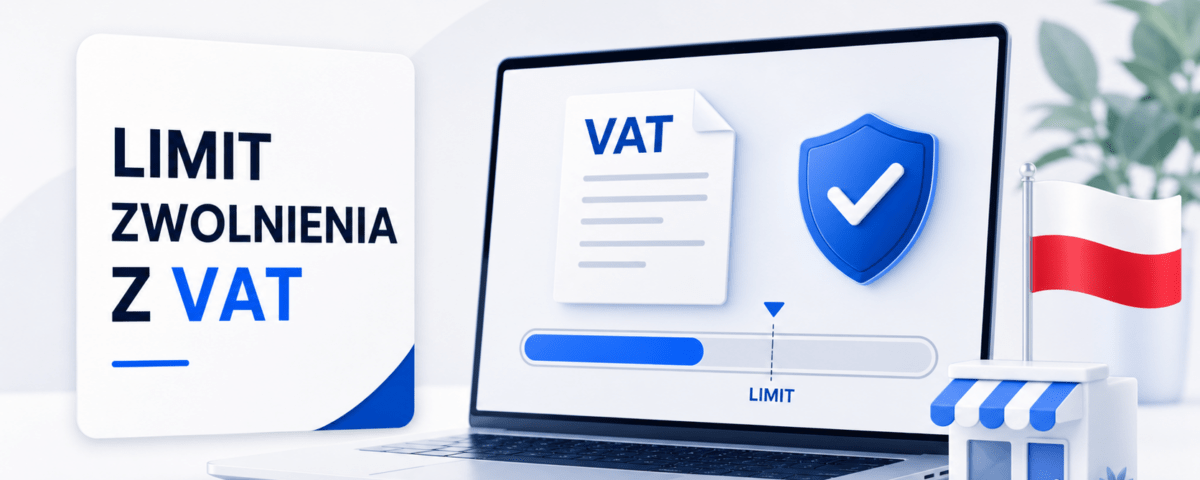
Лимит VAT в Польше Finoditax.
Choosing between operating under the subject VAT exemption (zwolnienie z VAT) and registering as an active VAT payer is a critical decision for any company in Poland. Making the wrong choice can impair profitability or lead to unexpected tax compliance issues. In this guide, the experts at Finoditax break down how the VAT exemption threshold works, when staying exempt is optimal, and when registration provides clear economic advantages.
Understanding the VAT Exemption Mechanism in Poland
Subjective VAT exemption allows small businesses to refrain from charging VAT on their sales until their annual turnover reaches the statutory threshold. A key operational requirement is calculating this threshold proportionally if business operations commence during the tax year.
- Pro-rata Calculation — For new companies, the turnover limit is calculated proportionally based on the number of active days remaining in the calendar year.
- Threshold Exceedance — VAT liability applies starting directly from the specific transaction that causes the total turnover to exceed the limit.
- Excluded Transactions — Certain sales, such as the disposal of fixed assets, do not count towards the VAT exemption limit.
Activities Requiring Mandatory VAT Registration from Day One
Polish tax law strictly identifies specific business categories that cannot benefit from the VAT exemption, regardless of their actual or projected revenue levels.
- Legal and Advisory Services — Providing legal advice, tax consulting, or management advisory services requires active VAT status from the first invoice.
- Jewelry and Excise Goods — Sales of precious metals, jewelry, or specific electronic components invalidate any right to VAT exemption.
- Debt Collection and Factoring — Invoicing for debt recovery, factoring, or specialized financial services triggers mandatory immediate VAT compliance.
When Remaining VAT-Exempt Is Financially Advantageous
Staying exempt from VAT is often the most cost-effective approach for businesses that primarily serve retail consumers (B2C) and maintain low operational purchases.
- Direct B2C Services — Individual retail clients cannot deduct input VAT, making prices without 23% VAT significantly more competitive.
- Low Purchase Overhead — If operational costs are minimal, there is little input VAT to claim back, making active registration unnecessarily complex.
- Streamlined Compliance — Exempt businesses benefit from simplified record-keeping and are exempt from submitting monthly JPK_VAT files.
Why Voluntary VAT Registration Can Increase Profitability
For corporate B2B activities, voluntary registration is frequently advantageous. Utilizing professional Accounting services for business in Poland ensures that input tax deductions are maximized and tax filings remain fully compliant.
B2B Market Access
Corporate clients prefer partners who issue standard VAT invoices so they can offset their own output tax.
Input VAT Deductions
Companies investing heavily in equipment, office leases, or inventory can recover input VAT directly from the tax office.
Cross-Border Transactions
Engaging in EU trade or international service delivery usually requires active VAT or VAT-EU status.
Step-by-Step VAT Registration Process in Poland
Registering as an active VAT payer requires careful preparation to satisfy the tax office's verification procedures.
- Step 1: Submission of VAT-R — Complete and submit the formal VAT-R application specifying the effective date of registration.
- Step 2: Address and Operational Verification — The local tax office (Urząd Skarbowy) may verify the physical business address and lease agreement.
- Step 3: White List Inclusion — Ensure entry on the official White List of VAT taxpayers to facilitate secure B2B payments.
Frequently Asked Questions About Polish VAT
Answers to practical questions regarding the management of VAT exemption limits.
Can a business re-enter VAT exemption?
Yes, re-entry is permitted after one full year following the end of the calendar year in which active VAT status was adopted.
What happens if the threshold is crossed mid-month?
The exact transaction that causes the breach must include VAT, and immediate VAT-R filing is required.
Need accounting support?
Need professional guidance on your VAT strategy in Poland? Contact Finoditax today for a tailored accounting assessment.