








Cash-Based PIT in Poland: How to Pay Tax Only After Receiving Payment
22.07.2026
IP Box in Poland: New Rules for the 5% Tax Rate and the 3-Employee Requirement
27.07.2026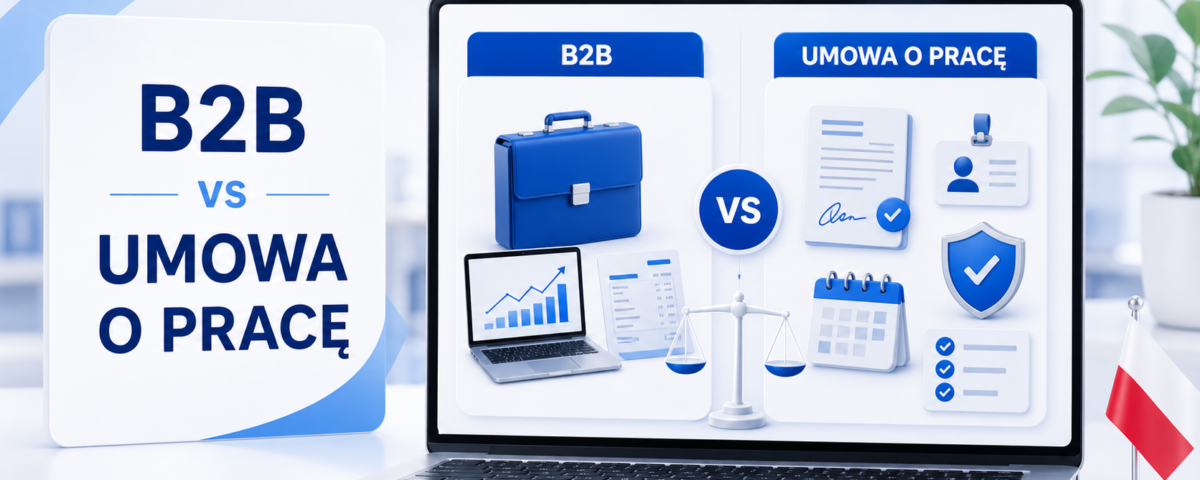
B2B VS (Umowa o pracę)
Engaging talent via B2B contracts has become a standard operational model for technology, consulting, and service firms in Poland. While B2B arrangements offer flexibility and tax advantages for both parties, the legal boundary separating an independent B2B contractor from a formal employee (Umowa o pracę) is strictly enforced. The National Labor Inspectorate (PIP) and tax authorities actively scrutinize B2B contracts to detect disguised employment. Misclassifying an employment relationship can trigger severe retroactive financial liabilities and administrative sanctions for the business.
Core Markers of an Employment Relationship under Polish Law
Polish law prioritizes the actual substance of daily working arrangements over contract titles. Under Article 22 of the Polish Labor Code, if a contractor operates under employee-like conditions, the contract may be legally reclassified as an employment relationship.
Organizational Subordination
Direct managerial supervision, mandatory obedience to operational instructions, and performance reviews.
Fixed Hours and Location
Requirements to work at specific locations during fixed hours set unilaterally by the client company.
Personal Performance Obligation
Prohibition against delegating tasks to substitutes or third-party subcontractors.
Client-Provided Equipment
Exclusive use of company hardware and tools without lease agreements or fair compensation.
Financial and Operational Fallout of Legal Reclassification
When PIP or a labor court determines that a B2B agreement masks an employment relationship, the client company faces massive retroactive claims.
- Retroactive ZUS Contributions — Mandatory repayment of unpaid social security and health insurance contributions plus statutory interest.
- Tax Adjustment Liabilities — Recalculation of personal income tax (PIT) withholdings and potential loss of tax-deductible expenses.
- Employee Entitlements — Financial claims for accrued paid leave, overtime pay, and statutory notice period compensations.
- Regulatory Fines — Administrative penalties levied on company management for violating statutory employment regulations.
Compliance Checklist: Is Your B2B Model Structurally Safe?
To withstand regulatory scrutiny, contracts and operational routines must be free from classic labor law indicators.
- Clean Legal Terminology — Strict avoidance of terms like 'salary', 'vacation', 'work hours', 'manager', or 'dismissal' in agreements.
- Substitution Rights — Explicit contract provisions allowing the contractor to assign qualified sub-contractors.
- Operational Independence — Autonomy for the contractor to decide how, when, and where deliverables are produced.
- Commercial Exposure — Contractor assumes full civil liability for performance defects and business risk.
Actionable Steps to Mitigate Contractor Misclassification Exposure
Implementing structured legal oversight protects your enterprise during labor and tax inspections.
- Step 1: Conduct a Contract Audit — Review all active B2B templates and individual agreements for high-risk clauses.
- Step 2: Align Operational Processes — Remove contractors from internal employee time-tracking tools and staff management hierarchies.
- Step 3: Refine Invoicing and Deliverables — Ensure invoices correspond to specific milestone protocols rather than hourly attendance sheets.
- Step 4: Educate Management — Train team leads on proper B2B vendor management to avoid issuing direct employee orders.
Frequently Asked Questions
Answers to pressing legal concerns regarding B2B engagement in Poland.
Does single-client B2B trigger automatic reclassification?
Working for one client is not illegal per se, but it elevates scrutiny during labor audits.
Can B2B contracts include paid time off clauses?
Including paid leave clauses creates high reclassification risk; compensation pauses should be reflected in overall pricing.
Who holds primary liability during a ZUS audit?
The hiring company bears the primary financial liability as the legal remitter.
Summary: Achieving Balance Between Flexibility and Legal Security
- Substance Over Form — Maintain genuine commercial independence in contractor relationships.
- Finoditax Expertise — Partner with Finoditax legal advisors to safeguard your contractor setup and ensure full compliance.
The B2B model remains a legally sound and highly beneficial framework in Poland when executed properly. Ensuring that contract language matches daily operational reality is essential for long-term business protection.
Need accounting support?
Need to audit your B2B contractor agreements and mitigate legal risks in Poland? Book a legal consultation with Finoditax experts today.

